 How-to
Roll-Off Dumpster Rental Process: A Step-by-Step Guide
Last Updated: November 28, 2026
Quick Summary
The roll-off dumpster rental process has five stages: assess your debris, pick a size, get a quote, prepare the site, and schedule delivery and pickup. Most roll-off dumpster rental quotes include a base rate, included tonnage, an overage rate per ton, and a rental window with an extension rate. Confirm those four numbers in writing before you book.
- One full pickup load is roughly 2 cubic yards of loose debris.
- A 20-yard container needs about 20 to 22 feet of clear truck access.
- A container on private property generally needs no permit; street placement usually does.
- A typical delivery truck needs about 12 feet of width and clear overhead space.
- A load above the fill line may be refused until it is leveled.
Table of Contents
- What Is the Roll-Off Dumpster Rental Process?
- Roll-Off Dumpster Sizes: Matching the Container to Your Debris
- Roll-Off Dumpster Rental Prices and What Drives the Final Bill
- What Can You Put in a Roll-Off Dumpster?
- How Long Can You Rent a Dumpster and How to Schedule an Extension
- Preparing the Drop-Off Location and Coordinating Delivery and Pickup
- Frequently Asked Questions
What Is the Roll-Off Dumpster Rental Process?
The roll-off dumpster rental process is the sequence of steps that gets a large open-top container delivered to your property, filled with debris, and hauled away.
Most guides treat the rental as a single transaction. In practice, the steps before delivery decide whether the job runs smoothly: get the debris estimate wrong and you'll pay for a second haul; skip the access check and the truck can't place the container.
Below, we walk through each stage of the roll-off dumpster rental process so you know what to expect, what to prepare, and what to ask before you book. If you're still deciding whether to start, see is dumpster rental worth it for small home renovations.
Assess Your Project Scope and Debris Volume
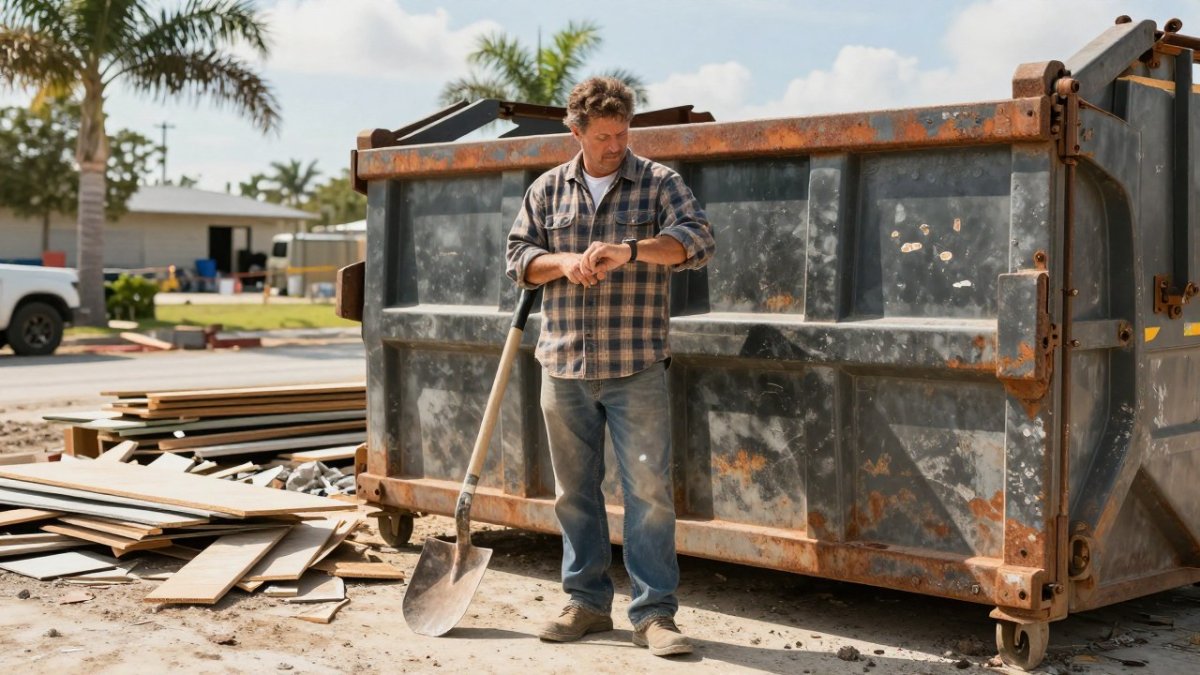
Start with an honest count of what you're throwing away. Walk the site and list every debris type: old cabinets, drywall, flooring, shingles, yard waste, furniture.
Then estimate volume in cubic yards. A common approach is to picture the pile in pickup-truck loads.
- Small bathroom tear-out: 1 to 2 pickup loads
- Kitchen remodel: 3 to 4 loads
- Whole-home cleanout: 5 or more loads
For remodel debris tied to a specific project, remodeling debris removal services can match the container to your material type and let you book removal in one step.
Roll-Off Dumpster Sizes: Matching the Container to Your Debris
Roll-off dumpster sizes are measured in cubic yards, and the common range runs from 10 to 40 yards.
| Size | Typical Dimensions | Best For | Watch the Weight |
|---|---|---|---|
| 10-yard | About 12 ft long | Small cleanouts, one-room jobs | Heavy debris fits well |
| 20-yard | About 14 ft long | Mid-size remodels, flooring | Good all-round choice |
| 30-yard | About 16 ft long | Large renovations, roofing | Check load limits |
| 40-yard | About 20 ft long | Whole-home or commercial | Light, bulky debris only |
Typical Dimensions
A common mistake is sizing up "just in case." A 40-yard container filled with concrete or dirt will blow past the weight limit long before it looks full.
Measure your placement area before you choose. A 20-yard container needs a clear run of roughly 20 to 22 feet for the truck to slide it off the trailer.
Roll-Off Dumpster Rental Prices and What Drives the Final Bill
Most roll-off dumpster quotes are built from four line items. Understanding each one is the difference between comparing two quotes fairly and comparing two numbers that mean different things.
**1.
2. Included tonnage. Every quote should state a weight allowance, commonly "includes X tons." Allowances vary by provider, container size, and material, so confirm the figure in writing.
3. Overage rate per ton. Once you exceed the included tonnage, the provider bills per ton over the allowance, usually prorated. Get the exact per-ton rate in writing.
**4.
How to Compare Two Quotes Side by Side
Put both quotes in the same four-column format, base rate, included tons, overage per ton, included days plus extension rate, and the cheaper option usually becomes obvious. A quote that looks $50 lower up front can be $150 more expensive after one overweight haul.
Fees That Show Up After the Fact
- Prohibited-item surcharges: tires, mattresses, electronics, and appliances with refrigerant often carry a per-item fee because they need separate handling.
- Contaminated-load fees: a load mixed with paint, chemicals, or treated wood may be rejected at the disposal site and billed as a special handling charge.
- Relocation or re-delivery: moving the container to a second spot on the property, or returning after a missed pickup window, can trigger a trip charge.
Watch out: a quote that does not state the included tonnage in writing is hard to compare. Ask for it before you sign, because the overage rate is where many surprise bills originate.
Weight Math You Can Do Before You Book
Dense materials can hit tonnage limits long before they fill the container, and mixed household debris is generally much lighter. Ask your provider how weight is calculated for your material. If your debris is dense, a smaller container with a clear tonnage allowance is usually cheaper than a large container you cannot legally fill.
Ask the provider to confirm in writing the included tonnage, overage rate, extension rate, and prohibited-item fees. Those four numbers, not the headline price, determine the final bill.
What Can You Put in a Roll-Off Dumpster?
You can put most household and construction debris in a roll-off dumpster, including wood, drywall, flooring, furniture, appliances, and yard waste. Common prohibited materials include hazardous waste, paint, motor oil, batteries, and medical waste; confirm the full list with your provider.
Commonly accepted materials include:
- Construction debris: lumber, drywall, siding, tile
- Household clutter: furniture, boxes, old carpet
- Yard waste: branches, leaves, soil in limited amounts
Materials that are usually prohibited:
- Wet paint, solvents, and chemicals
- Asbestos and lead-based materials
- Tires, propane tanks, and batteries
Load heavy material first, then lighter debris on top. Keep everything below the fill line so the container stays legal for hauling and the load stays balanced.
How Long Can You Rent a Dumpster and How to Schedule an Extension
Rental periods vary by provider. If your project runs long, ask about scheduling an extension and its daily or weekly fee before you book.
Plan the timeline around your busiest work days, most debris lands in the first few days of a tear-out.
Reliable pickup matters as much as delivery. If timing is tight, read up on how to schedule reliable dumpster pickup and lock in a window that fits your crew's schedule.
Preparing the Drop-Off Location and Coordinating Delivery and Pickup
Pick a flat, solid surface close to the debris but clear of overhead lines. A driveway is ideal.
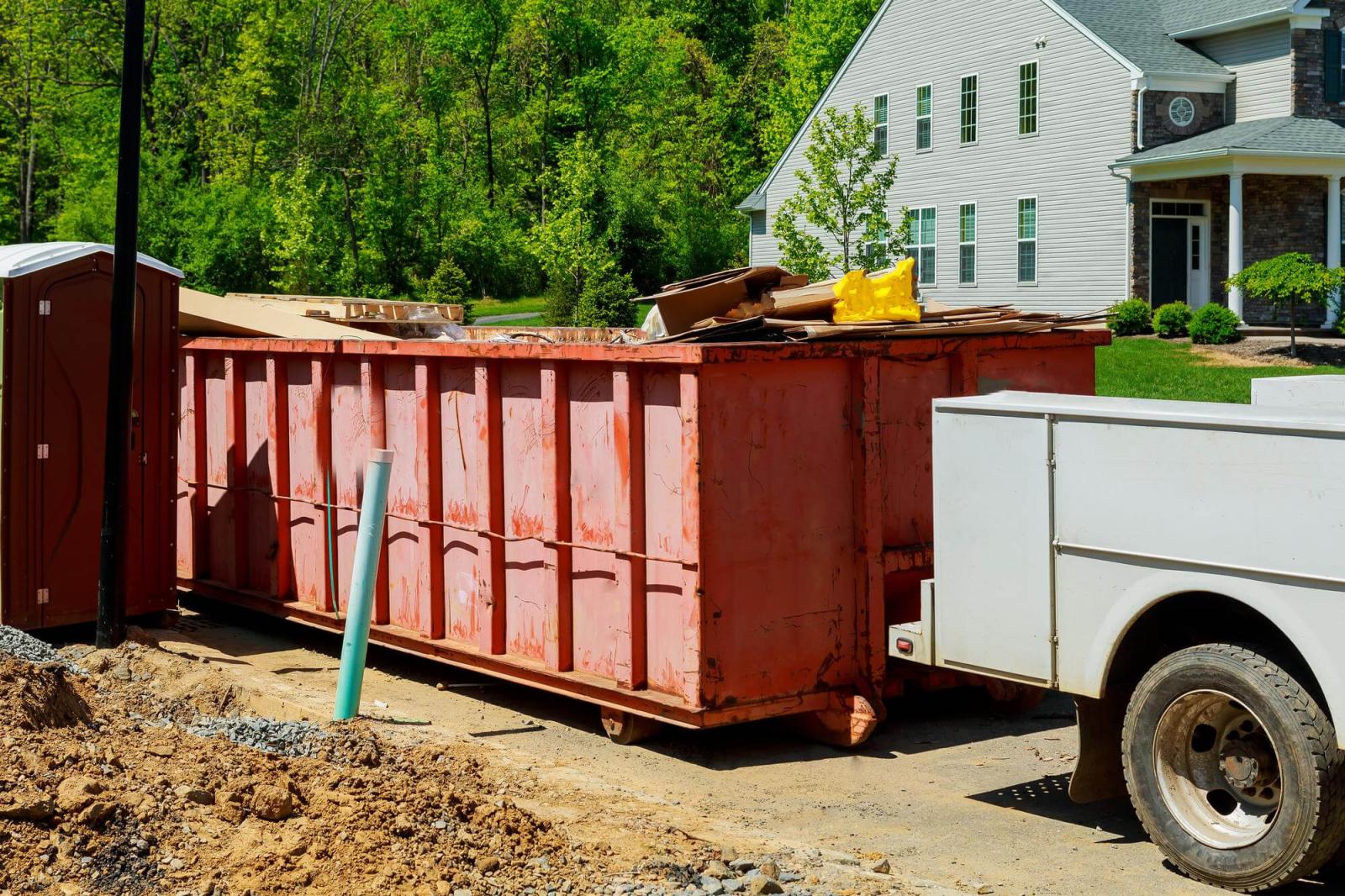
Protect the surface underneath. Plywood boards can spread the container's weight and guard concrete from scratches. Then confirm the delivery window with a real person, not a form.
Permits and Placement Rules
Placement rules are set locally and vary block to block. Generally, a container on private property (driveway, yard, private lot) needs no permit, while one in the street, alley, or public right-of-way usually does.
How to check before you book:
- Call the city or county public works or permits office and ask specifically about "roll-off container" or "temporary dumpster" placement in the right-of-way.
- Ask the provider whether they pull the permit or whether it is the customer's responsibility, this varies, and it should be stated in the quote.
- If you live in an HOA, check the covenants for placement, duration, and screening requirements; HOA rules can be stricter than city rules.
Watch out: a container placed in the street without the required permit can be ticketed or towed, and the ticket usually goes to the property owner, not the hauler, confirm who is responsible in writing before delivery.
Access Clearance and Obstacles to Remove
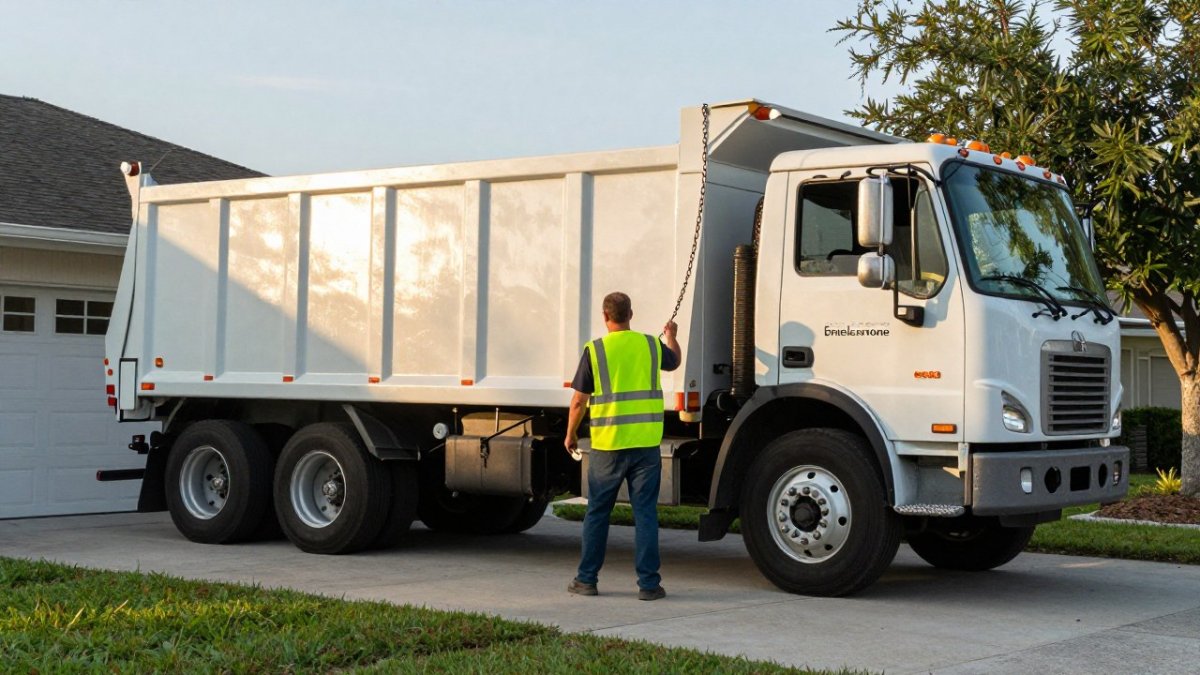
Measure the gate width and the clear path to the drop spot. A typical delivery truck needs about 12 feet of width and clear overhead space. Remove these before the truck arrives:
- Parked cars and trash bins
- Low tree branches
- Fences, gates, or basketball hoops
Confirm the surface can bear the load. A loaded container concentrates weight on a small footprint, and a soft lawn, gravel drive, or freshly paved driveway can rut or crack. Plywood or a gravel pad under the rails helps; if the only spot is soft ground, ask whether the provider can place it on the street instead.
Delivery Day: What to Expect
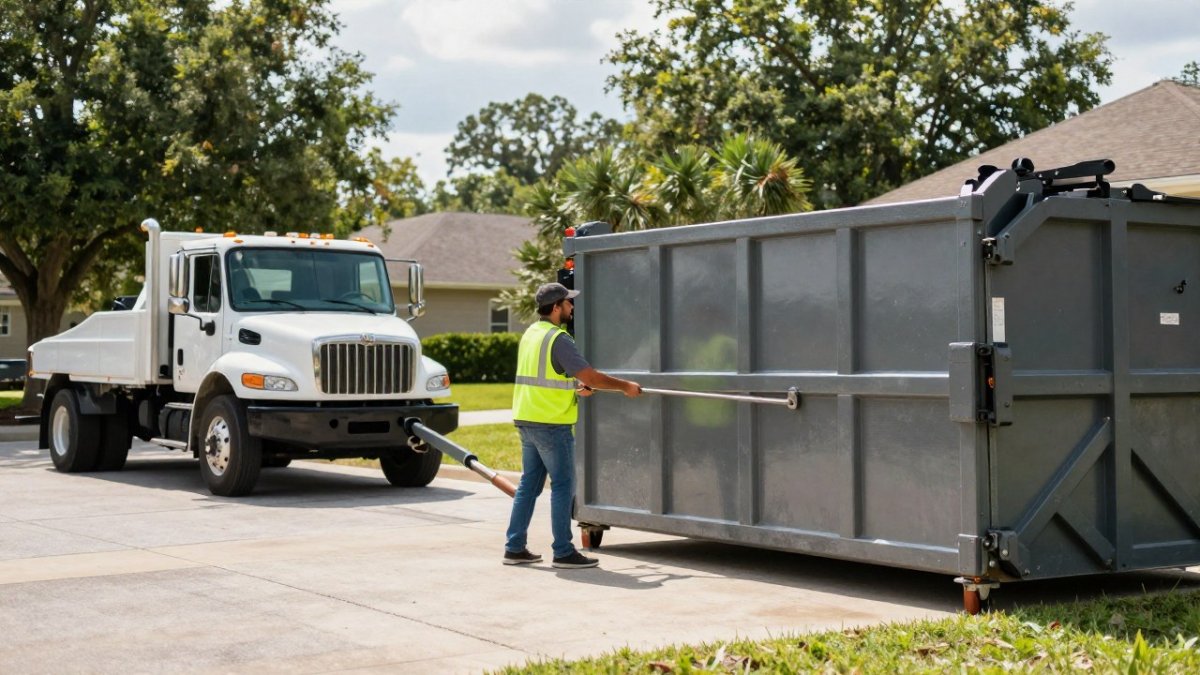
The driver backs the truck to the drop spot, tilts the bed, and slides the container off the rails. The drop typically takes only a short time if access is clear. Walk the spot with the driver before the container comes off the truck, once it is on the ground, repositioning it is a second trip.
Pickup Readiness and Contingency Planning
Plan for the things that go wrong:
- Missed delivery window: ask for a call-ahead window and a phone number for the dispatch desk, not just the sales line.
- Blocked access on pickup day: a parked car or locked gate can trigger a dry-run charge; clear the path the night before.
- Overfilled container: a load above the fill line may be refused until leveled; keep debris below the rail.
Once the site is ready, a quick call is all it takes to arrange delivery and pickup around your schedule.
Frequently Asked Questions
What is the process of renting a roll-off dumpster?
The process starts with estimating your debris volume and project scope, then choosing a container size that fits both the load and your available space. You request a quote, confirm the rental period and any permit needs, and prepare a clear drop-off location. The provider delivers the dumpster, you load it to the fill line, and pickup is scheduled at the end of the rental. A roll-off dumpster rental works best when you confirm access clearance and weight limits before booking.
What size roll-off dumpster do I need for a home renovation?
Size depends on debris volume, not just the room count. A small bathroom tear-out usually fits a 10- to 15-yard container, while a full kitchen remodel or roofing job often needs a 20-yard. Whole-home renovations and estate cleanouts may call for a 30- or 40-yard. Measure your placement area and confirm the container dimensions with your provider before you book, since a larger dumpster you cannot fit in the driveway creates a bigger problem than an undersized one.
What items are not allowed in a roll-off dumpster?
Prohibited materials typically include paint, solvents, motor oil, batteries, tires, medical waste, and appliances containing refrigerant. Yard waste and concrete may be restricted or require a separate container depending on local rules. Ask your provider for a written list before loading. Putting prohibited materials in a roll-off dumpster can trigger extra fees or a rejected haul, so sort hazardous items out first and confirm accepted materials in advance.
How much does it cost to rent a roll-off dumpster?
Roll-off dumpster rental prices depend on container size, rental period, delivery distance, weight allowance, and local disposal fees. Overweight loads and prohibited materials add charges, so ask for a quote that lists the included tonnage and the per-ton overage rate. Brielastone & Dumpsters LLC publishes pricing on its website, and a transparent quote should show delivery, pickup, and the rental period up front so the final bill matches what you were told.